8 min read
Choose Fortinet or pfSense by the cost of failure
Fortinet or pfSense for a small organization: comparing subscriptions, support, daily work, and the cost of self-managed operations.
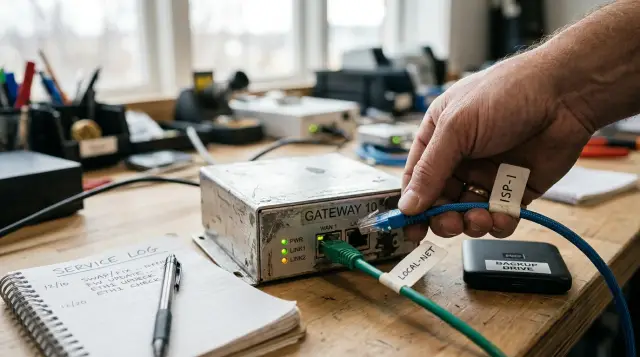
The choice between FortiGate and pfSense for a small organization cannot be reduced to the price of the box and a zero license fee. You will pay in either case: Fortinet charges for a predictable set of services and support, while pfSense CE shifts a substantial share of the expense into administrator time, spare components, and operational discipline.
If you have a network engineer on staff who regularly updates gateways, investigates VPN failures, and knows how to restore a configuration on different hardware, pfSense can deliver an excellent result at a sensible cost. If a generalist system administrator runs the perimeter and an office outage needs an owner and a response deadline, FortiGate is usually easier to defend to management. pfSense Plus with a Netgate appliance and TAC sits between those poles, so the comparison of «paid Fortinet versus free pfSense» starts with the wrong premise.
The price has five line items
Calculate total cost over three or five years, not the first invoice. The estimate includes the appliance, subscriptions, implementation, regular operations, and the consequences of downtime. The last line rarely appears in a sales quote, although it is the one that changes the decision.
For FortiGate, ask the supplier for the price of the right model, the required FortiGuard bundle, FortiCare, a second power supply or a second node if needed, and renewals for the whole planning period. Do not apply the price of an entry model to your network: enabled IPS, antivirus, web filtering, logging, and VPN change actual performance. A quote without the exact appliance SKU, bundle contents, and support term cannot be compared with anything.
The pfSense CE license really is free, but the gateway still needs compatible hardware, good network cards, storage, a spare node, and a person. Netgate states in its hardware sizing guide that throughput depends on packet size, network adapters, VPN encryption, and packages such as Snort or Suricata. A processor number on a product page does not replace measurement with your traffic profile.
A useful calculation looks like this:
TCO = gateways + subscriptions + implementation + operating hours + redundancy + expected downtime
expected downtime = probability of failure × recovery time × cost per hour of downtime
Do not pretend the last line has accounting precision. Three scenarios are enough: an ordinary one-hour failure, a failed update that costs a working day, and the loss of the main administrator for a week. If the free option remains cheaper in all three, it has an economic case. If it wins only when labor costs nothing and recovery is instant, that is a wish, not a calculation.
A Fortinet subscription pays for currency and escalation
A FortiGate without an active service bundle does not become a brick, but comparing that mode with a fully licensed appliance is unfair. Basic routing, NAT, and firewall rules are separate from continuously updated security services. Fortinet says that current antivirus and IPS signatures require a valid FortiGuard license, and that ATP, UTP, and Enterprise bundles contain different sets of functions.
The bundle differences have a practical meaning. ATP covers intrusion prevention and malicious file protection; UTP adds DNS and web filtering, among other services; Enterprise extends the set with further services. A small office does not automatically need the widest bundle. First write down which functions will actually be enabled and who will review their alerts. Unused DLP in a license does not protect data.
FortiCare pays for access to support and firmware updates. The current Fortinet guide says a valid Firmware & General Updates entitlement is required to move to the next minor or major FortiOS branch. When the entitlement is invalid, the appliance may receive a patch within its current minor version through the mechanism defined by the vendor, but that is not the same as open access to every new release. The budgeting conclusion is simple: renewal belongs to normal operation of the appliance, not to optional improvement.
You can check entitlements with more than a glance at the interface. Fortinet documents this command:
diagnose test update info contract | grep FMWR
Look for the FMWR status and expiry in the output. Add the check to a monthly routine and set a renewal reminder early. A lapsed subscription discovered during a vulnerability or support case costs more than a calm budget approval.
Free pfSense needs an operations owner
pfSense CE fits a production perimeter when the organization deliberately accepts the community model. It is an independent edition, not a free tier of commercial support. Netgate states directly in its support FAQ that TAC does not support pfSense CE; official TAC requires a move to pfSense Plus. The forum and documentation can help, but they have no obligation to accept a critical incident and respond within a defined time.
That does not make CE unsafe or amateur software. It provides a full firewall, NAT, VLAN, VPN, multi-WAN, and a substantial package system. Trouble starts when an organization treats the presence of a feature as a finished process. An installed Suricata still needs configuration, updates, resource limits, and false-positive handling. A backup link must be tested by disconnecting the primary link, not by admiring a green icon on the dashboard.
Decide separately what you mean by pfSense. Community Edition remains the free edition. pfSense Plus develops separately, receives releases more often, and has capabilities that CE lacks; it ships on Netgate appliances and is available through subscription models for other deployment options. Netgate offers TAC Lite, Pro, and Enterprise with different channels and initial response targets. Free CE on a random mini PC and Plus on a Netgate appliance with TAC share a familiar interface, but carry very different operational risks.
Assign an owner to five duties: reading security notices, checking backups, installing updates, controlling packages, and recovering after a failure. Every duty needs a deputy and an allowed completion time. If there is no name, the actual owner becomes whoever happens to be nearby when the failure occurs.
Daily work matters more than a pretty interface
For a generalist administrator, FortiGate usually provides a more coherent working environment: rules, objects, VPN, security profiles, licenses, and service health appear in one management model. That reduces the number of places where an update can be forgotten or an expired entitlement can go unnoticed. The cost of convenience is not limited to the subscription: the administrator becomes accustomed to FortiOS terminology and the way the vendor connects its functions.
pfSense is simpler when you need transparent routing, NAT, VLAN, DHCP, DNS, and a few VPNs without a broad set of inspection services. The interface is fairly direct, and the configuration lives in XML. Extra packages, however, have their own settings, logs, and update cycles. The more you try to assemble an all-purpose security platform out of pfSense, the more integration work your team retains.
Production changes made on the spot are dangerous with either option. The administrator should record the reason for a rule, the expiry of temporary access, and the owner of the business service. A fresh configuration backup is required before a change; afterward, test more than internet access by checking published services, tunnels, DNS, backup WAN, and logging. A convenient interface speeds up the right action and makes a wrong one just as fast.
I judge daily administration with a short exercise. I give the staff member four tasks: find a rule by address, understand why traffic was blocked, add temporary access with logging, and roll back the change. If the person can do this only by following the integrator's instructions and cannot explain the result, the platform has not yet been handed over to operations.
Support begins before an outage
Support availability is measured by the chain from your employee to an engineer who can change the configuration, not by a phone number on a website. Fortinet's commercial model is clear: depending on the level, FortiCare provides web and phone support, updates, and hardware replacement procedures. FortiCare Premium is normally included in FortiGuard bundles, but the exact contents and terms of a specific purchase must appear in the contract.
pfSense has two different routes. Netgate offers TAC for pfSense Plus, and the official site lists different target initial response times for Pro and Enterprise. Official TAC does not cover CE. An organization can purchase service from a local integrator, but it should verify who answers at night, whether the provider has a lab and a spare appliance, and whether its engineers know your packages. «We will help when we can» is not an SLA.
Ask a prospective provider to work through one scenario: after an update, the IPsec tunnel to a branch no longer comes up. Who accepts the ticket, what data do they request, can they connect through a backup path, who approves a rollback, and how quickly will they deliver a replacement after a storage failure? The answer quickly separates a working support service from a contact reseller.
Vendor support has limits as well. It helps with a product defect and a documented configuration, but it does not have to know your addressing plan, accounting application, or the reason for an old rule. Keep the diagram, tunnel register, provider list, and change log under your control. Otherwise, the first hours of any ticket will be spent reconstructing context.
Self-managed operations fail in predictable ways
A typical pfSense failure begins with accumulated neglect, not an attack. A small organization installs CE on a compact computer, enables VPN and a few packages, then makes changes for two years without a test node. Someone occasionally downloads a backup to the administrator's laptop, but nobody has restored it. When the storage starts reporting errors, they reboot the gateway and it never starts again.
A different computer with different network controllers is found on a shelf. The installer runs, but interface assignments change; the restored configuration brings up WAN and LAN on the wrong ports. Only an unavailable employee knows the password for the encrypted backup. Internet access returns through a temporary router after several hours, but the site-to-site VPN, mail publishing, and remote access remain offline.
No single step in this story is hard. Four organizational debts caused the outage: unverified spare compatibility, an untested restore, one keeper of the secret, and no minimum emergency configuration. A Fortinet subscription does not automatically remove those debts either, but a standard appliance, replacement entitlement, and support reduce the number of unknowns.
The pfSense documentation recommends keeping a copy of config.xml and testing restoration on a separate machine or virtual machine. It also warns that some packages may store data outside the main file. Make the test literal: perform a clean installation, restore the full backup, verify interfaces, start the VPN, check rules, and export a new backup. A working web interface does not prove that the service has recovered.
Run the same exercise on FortiGate through the supported backup and restore procedure for your FortiOS version. Record version compatibility, the storage location of the encrypted backup, and access to the support account. The goal of the exercise is a confirmed time to restore connectivity, not an attractive document.
Test performance with protection enabled
You cannot size a gateway by port speed. Vendors publish different figures for basic firewalling, VPN, and threat inspection, while real traffic contains packets of different sizes. Small packets, large numbers of concurrent connections, and encryption load an appliance differently from one large file transfer.
For FortiGate, use the figure for the exact mode that you intend to enable from the data sheet for the specific model. Then leave headroom for growth, signature updates, and peaks. If TLS inspection is required, test the impact of that exact feature and settle the workstation certificate question in advance. Buying the smallest model because «it will do for now» often ends with IPS disabled for speed, which means giving up the protection you purchased.
For pfSense, the choice of network adapter can matter more than a modest increase in CPU frequency. The Netgate guide specifically warns that cheap adapters use more CPU, while Snort and Suricata need memory and reduce available throughput. VPN performance depends on the algorithm and hardware acceleration. A specification that says «four 2.5 Gbps ports» therefore says nothing about IPsec or inline Suricata speed.
Capture your network profile: peak inbound and outbound throughput, number of users, number of tunnels, inter-branch speed, expected connection count, and the inspections you will enable. Then test the candidate with real rules and logging. For a small organization, healthy headroom is more useful than a feature nobody will operate.
High availability also costs money. A FortiGate failover pair requires compatible appliances and correct licensing for the selected services. pfSense builds an active and standby design with CARP, XMLRPC configuration synchronization, and pfsync state synchronization; the documentation recommends a dedicated synchronization interface. With either product, a cluster that never undergoes a failover test merely doubles the device count.
The operating model decides
Compare the choices in one table and make the responsible people sign off on the assumptions. Ratings such as «low», «medium», and «high» need an explanation in money or hours for your organization.
| Criterion | FortiGate with services | pfSense Plus with TAC | Self-managed pfSense CE |
|---|---|---|---|
| Initial invoice | Usually higher | Depends on the appliance and TAC | Usually lower |
| Recurring payments | FortiGuard and FortiCare | Subscription or TAC level under the supply model | No license payment |
| Official support | Available under contract | Available with active TAC | None, community and contractors are available |
| Integrated security services | Yes, under the selected bundle | Some functions are built in, others come from packages | The team assembles and runs packages itself |
| Reliance on one employee | Medium when documentation is poor | Medium | High without a deputy and a lab |
| Hardware choice | Limited to the product line | Depends on the Plus option | Broad after compatibility testing |
FortiGate makes more sense when the organization needs updated security services, formal escalation, predictable renewal, and a standard appliance. This is especially true for an office without a dedicated network engineer, a regulated environment, or a site where one hour of downtime costs more than a year of license savings.
pfSense CE makes more sense when the team knows networks and the FreeBSD environment, is ready to support the hardware, has a tested spare, and deliberately chooses not to buy official TAC. It also works well for a straightforward routing perimeter, a lab, or a branch where functions are limited and recovery is rehearsed regularly. The savings come from skill and standardization, not from the word «free».
Treat pfSense Plus with a Netgate appliance and suitable TAC as a separate commercial option. It retains the familiar pfSense model while reducing some hardware and support risks. Sometimes it provides the most honest comparison with FortiGate.
Set the TLS decryption boundary before the pilot. If the organization wants to inspect HTTPS content, it must deploy a trusted corporate certificate to managed devices, exempt applications that do not tolerate certificate substitution, and identify traffic categories that must not be decrypted for legal or internal reasons. Without that work, the advertised function will remain disabled or break applications. Both FortiGate and a package-based pfSense design need managed certificate infrastructure, not a checkbox.
Treat logs the same way. Decide how many days they are needed, where they go, who receives alerts, and which events truly require action. A local log on the only gateway helps investigate a fresh error, but it disappears with a failed drive and works poorly for an old incident. Storage volume depends on the number of rules, enabled logging, DNS, VPN, and security profiles. An estimate without external log storage may understate both platforms.
Do not confuse link redundancy with gateway redundancy. Two providers do not help when the only firewall fails. Two gateways do not help when both connect to the same switch, power outlet, and carrier entrance. Draw the packet path from the provider cable to the network core and mark every shared point of failure. Sometimes a second power supply and a separate switch achieve more than a complex cluster on the same electrical circuit.
Account for the hardware life cycle. For FortiGate, request end-of-sale and end-of-support dates for the exact model, along with supported FortiOS branches. For a self-built pfSense appliance, record network controller models, storage type, BIOS settings, and a source for a compatible replacement. Buying one spare with the primary appliance is often cheaper than urgently searching for a similar mini PC several years later.
Migration must appear in the estimate too. Rules cannot be moved mechanically if the old gateway has accumulated duplicates, temporary permissions, and objects with no owner. First export current networks, published services, tunnels, and routes, then confirm them with service owners. Build the new platform configuration only after that cleanup. Otherwise, the new product will reproduce every old error accurately and the team will call it a successful migration.
Test your exit from contractor dependence. The organization must own registration accounts, licenses, backups, certificates, and administrative passwords. The contract should define the format for handing over configuration and documentation when services end. With FortiGate, control of the account that holds the appliance and support entitlements is particularly important. With pfSense, you need access to the full config.xml, its encryption password, and a list of nonstandard changes outside the configuration.
Finally, judge staffing without pretending. One strong engineer can run pfSense for less than any subscription while that person works at the organization and has time. If the calendar is full of user tickets, servers, and telephony, there is no spare capacity for reading advisories and testing updates. In that case, operating hours must be reserved by management or bought from a provider. A free license does not create working time.
Translate audit requirements into specific settings before choosing a product. The phrase «we need a certified firewall» says nothing about log retention, role separation, rule approval, or proof of updates. List the evidence the organization must show an auditor: who changed a rule, who approved it, when firmware was installed, where an alert went, and how the backup was tested. Obtain that evidence from each platform during the pilot. If an engineer manually assembles screenshots from five pages for every report, the labor belongs in the cost of every audit.
Move administrative access away from the normal user path. The management interface should not be open to the whole internet or every office VLAN. Allow it only from a separate network or through a managed VPN, restrict sources, enable multifactor authentication where the chosen design supports it, and log sign-ins. Keep a tested emergency access method for an identity system failure. The principle is the same on both platforms, but you must confirm implementation and licensing details for your version.
Plan updates as risky changes, not as a maintenance button. Subscribe to vendor advisories, select a supported branch, read release notes, and check VPN, package, and backup compatibility. On a single gateway, agree on a window and rollback method first. In an HA pair, update a node through the documented platform procedure and test failover. Automatic patching helps only when the organization understands its window, notifications, and failure behavior.
Prepare incident data collection that does not destroy evidence. A staff member should know how to export the configuration, system events, VPN log, state table, and version details without rebooting the appliance by reflex. Record who receives these materials and how secrets are removed from them. Support can work faster with an exact failure time, endpoint addresses, tunnel identifier, and recent changes than with «the internet drops sometimes».
Run a separate bad-day test. Disconnect the primary link, block a test VPN with a wrong rule, and ask the administrator to find the cause without the implementer's help. Watch where the person searches for events, whether the rule order makes sense to them, and whether they can safely undo only their own change. This test shows the cost of ordinary diagnosis better than a feature list. If the employee works confidently in pfSense, FortiGate's integrated interface may not repay its cost. If the employee gets lost among packages and scattered logs, future downtime has already consumed the CE savings.
Leave operating metrics in place after selection. Every month, check entitlement expiry, update availability, the age of the last external backup, backup link success, and the number of temporary rules past their expiry. Every quarter, restore the configuration on a spare or lab system and record the actual time. These measures show when the cheaper option stops being cheap and when the paid package stops receiving the attention you bought.
The pilot must end with acceptance
Do not choose a winner from an interface demonstration. The pilot should reproduce the working configuration: two providers, the required VLANs, one typical VPN, a published internal service, logging, and the security functions the organization is prepared to own. Measure speed and the time a staff member needs to diagnose a fault.
Before acceptance, require a package that stays inside the organization: a current diagram, address and VLAN table, rule register with owners, subscription list, backup, emergency access guide, and recovery record. Check accounts: named users instead of one shared account, multifactor protection where supported, and separate storage for emergency credentials.
GSE.kz can build this perimeter as a vendor-neutral integration project and include it in a nationwide 24/7 technical support arrangement in Kazakhstan. The exact gateway should still follow from requirements, tests, and accepted responsibility, not from a seller's wish to lock in one brand.
Record three numbers in the acceptance document: allowed downtime, support response time, and proven recovery time on the spare appliance. The difference between Fortinet and pfSense then becomes less ideological. One option buys more ready-made responsibility, while the other requires the organization to create and prove that responsibility itself.
Frequently asked questions
Which costs less for a small office, FortiGate or pfSense?
pfSense CE usually produces a lower first invoice, but the total depends on administrator time, a spare appliance, and recovery. FortiGate is often more economical where downtime is expensive and there is no dedicated network engineer.
Will FortiGate continue working without a FortiGuard subscription?
Basic routing and firewall rules do not disappear, but subscription services lose current updates and some availability. Entitlement to move between FortiOS branches is also tied to an active update contract, so operations without renewal must be assessed in advance.
Can a company use free pfSense CE safely?
Yes, if the company provides its own updates, redundancy, monitoring, and recovery. Official Netgate TAC does not support CE, so a critical incident must go to your employee or a separate contractor.
How does pfSense Plus differ from pfSense CE for business?
Plus develops as a commercial edition, has a separate release cycle, and includes additional capabilities. TAC is available for Plus, while CE relies on documentation, the community, and third-party specialists.
Does pfSense need a separate server?
It needs a compatible physical or virtual node with enough CPU, memory, and network adapters. Size it for VPN, traffic inspection, packet sizes, and connection counts, not just port speed.
Does FortiGuard replace endpoint antivirus?
No. Network services see and block some threats at the perimeter, but they do not control everything on an endpoint, especially encrypted or local traffic. Workstation protection remains a separate layer.
Can I install Suricata on pfSense and get the equivalent of FortiGate?
Suricata adds IDS or IPS, but it does not turn a collection of packages into the same product. Your team must manage rules, resources, false positives, updates, and package compatibility.
Which option is easier for one system administrator to manage?
FortiGate with suitable services is usually simpler as one supported package. pfSense can be simpler for plain routing and VPN, but every extra package increases the amount of integration you own.
Does a small organization need two firewalls?
If allowed downtime is shorter than the time needed to deliver and configure a replacement, you need a spare. It may be a full HA cluster or a cold spare with a tested backup, but it must be started and tested regularly.
What should we test before buying a gateway?
Reproduce actual traffic, VPN, provider failure, backup restoration, and typical staff actions. Put subscription contents, response time, hardware replacement, and responsibility boundaries in the contract.